If you lease commercial premises in London or the Home Counties, dilapidations will almost certainly land on your desk at some point. For tenants, a dilapidations claim at the end of a lease is often the single largest unplanned cost of the whole tenancy. For landlords, unresolved dilapidations mean a building that cannot be re-let and rent that is not coming in.
This guide explains what dilapidations are, how a dilapidations claim works in England and Wales, what it typically costs, and how to keep the final bill under control. It is written from the point of view of a dilapidations contractor: Woodhams Group has carried out dilapidations and repairs works on offices, retail units, industrial buildings, warehouses and listed buildings across London, Surrey, Hampshire, Berkshire, Buckinghamshire, Hertfordshire, Kent, Essex and Sussex.
What are dilapidations?
Dilapidations are breaches of the repairing, decorating, reinstatement and yielding-up obligations in a commercial lease. In plain terms, they are the works a tenant is contractually required to carry out so that the property is handed back in the condition the lease demands. When those works are not done, the landlord can bring a dilapidations claim for the cost of putting them right.
A typical commercial lease in the UK will place some or all of the following obligations on the tenant:
- Repair – keeping the premises in good and substantial repair throughout the term, which usually means putting it into repair even if it was in poor condition at the start.
- Decoration – redecorating internally and externally at set intervals and again in the final months of the lease.
- Reinstatement of alterations – removing partitions, mezzanine floors, suspended ceilings, kitchens, data cabling, air-conditioning and anything else fitted under a licence for alterations, and making good.
- Compliance – keeping the building compliant with statutory requirements, for example fire alarm, electrical and gas certification.
- Yielding up – handing the premises back clear of the tenant’s fixtures, clean and in the required condition on the last day of the term.
The exact wording of the lease is everything. Two units in the same building can carry very different dilapidations liabilities depending on how the repair clause was drafted and whether a Schedule of Condition was attached.
Types of dilapidations claim
Dilapidations can arise at three points in a tenancy:
- Interim dilapidations – served during the lease, usually because the landlord believes the building is falling into disrepair. An interim schedule of dilapidations lists the breaches and gives the tenant a period to remedy them. In some leases the landlord can enter, do the work and recover the cost.
- Terminal dilapidations – the most common type. In the final 12 to 18 months of the lease the landlord’s surveyor inspects and serves a terminal schedule of dilapidations, setting out every breach and the remedial work required. The tenant can carry out the works before the lease ends or, more often, the parties negotiate a financial settlement.
- Final (post-expiry) dilapidations – served after the tenant has vacated. Because the tenant no longer has access, the claim is for damages rather than for works, and it is usually accompanied by a quantified demand setting out the landlord’s losses.
How the dilapidations process works in England and Wales
Terminal dilapidations claims in England and Wales are governed by the Dilapidations Protocol, formally the Pre-Action Protocol for Claims for Damages in Relation to the Physical State of Commercial Property at Termination of a Tenancy. The courts expect both sides to follow it before any proceedings are issued. In outline:
- Inspection – the landlord’s building surveyor inspects the premises, usually shortly before or after lease expiry.
- Schedule of dilapidations – the landlord serves a schedule, normally within 56 days of the end of the term, itemising each breach, the clause of the lease it relates to, the remedial work and a cost against each item. It is accompanied by a quantified demand and an endorsement from the surveyor confirming the claim is reasonable.
- Tenant’s response – the tenant has 56 days to respond, item by item, usually through their own surveyor. This is where items are challenged as not being breaches, as being outside the tenant’s obligations, or as over-priced.
- Negotiation – the two surveyors meet, agree what they can, and narrow the dispute. Most claims settle at this stage.
- Alternative dispute resolution or court – only if negotiation fails. In practice a small minority of dilapidations claims go anywhere near a courtroom.
Two points of law shape every negotiation. Under section 18(1) of the Landlord and Tenant Act 1927, a landlord’s damages for breach of a repairing covenant are capped at the amount by which the disrepair has reduced the value of the landlord’s reversion (the “diminution in value”). And if the landlord intends to strip out or redevelop the building anyway, so that the tenant’s repairs would be wasted, the claim for those items can fall to nothing. Both are reasons why the first figure on a schedule of dilapidations is rarely the figure that is finally paid.
How much do dilapidations cost?
There is no standard dilapidations cost; it depends on the size of the premises, the state it has been left in and how heavily it was altered. The factors that move the number most are:
- Extent of disrepair – worn carpets and scuffed walls are cheap to put right; failed roofing, cracked cladding, defective M&E plant and water damage are not.
- Reinstatement of alterations – stripping out a fitted-out office or a mezzanine and returning the unit to shell condition is often the biggest single cost on a schedule.
- Property size and type – a small high-street unit might carry a claim in the low thousands; a multi-floor London office or a large industrial unit in the Thames Valley or along the M25 can run well into six figures.
- Professional fees – the landlord will usually seek to recover their surveyor’s and solicitor’s fees as part of the claim.
- Loss of rent – if the landlord cannot re-let while the works are carried out, the rental void can be added to the claim.
For tenants, the most reliable way to control this cost is to carry out the dilapidations works yourself before the lease ends, using a contractor who prices from the schedule. A landlord’s quantified demand is built on the landlord’s surveyor’s estimates and the landlord’s contractor’s rates. A competitive price from an experienced dilapidations contractor is frequently lower, and doing the works removes the loss-of-rent and professional-fee elements of the claim altogether.
Dilapidations advice for landlords
- Get the lease right. Clear repair, decoration and reinstatement clauses, and an obligation to remove alterations, are what the claim will rest on.
- Serve an interim schedule where a building is deteriorating. Dealing with disrepair mid-term is far cheaper than discovering it at expiry.
- Instruct early. Have your surveyor inspect 12 to 18 months before expiry so the schedule can be served in good time.
- Decide what you want the building to be. A realistic reinstatement and repair programme, priced by a contractor, strengthens the claim and gets the unit back on the market sooner.
- Appoint one contractor for the whole job. Strip-out, building repairs, roofing, cladding, M&E, decoration and certification delivered under a single Principal Contractor means one programme, one point of responsibility and a faster re-let.
Dilapidations advice for tenants
- Read the repair clause before you sign. A “full repairing” lease with no Schedule of Condition can make you liable for defects that pre-date your occupation.
- Insist on a photographic Schedule of Condition. It is the only reliable evidence of the condition you inherited.
- Keep a file of alterations. Every licence for alterations, drawing and O&M manual will be needed when it comes to reinstatement.
- Budget from year one. Treat dilapidations as a known liability and accrue for it, not as a surprise in the last quarter.
- Challenge the schedule, but do the works. Have a surveyor test each item against the lease, then get a firm price for the agreed scope from a dilapidations contractor. Completing the works yourself, on time, is usually the cheapest way to close the claim.
- Start early. Reinstatement works in a live building take planning, and the works must be finished by the last day of the term. Leaving it to the final six weeks removes your bargaining position.
What a dilapidations contractor actually does
Surveyors and solicitors deal with the claim; a dilapidations contractor delivers the works that close it. At Woodhams we take a schedule of dilapidations, or a tenant’s agreed scope, and deliver the whole package as Principal Contractor under CDM, with in-house trades and a trusted supply chain. Typical dilapidations works include:
- Strip-out and site clearance, with waste segregated and recycled
- Demolition of partitions, mezzanine floors, raised access floors and suspended ceilings
- Removal and making good of air-conditioning, boiler plant, kitchens and data cabling
- Roofing repairs, rooflight replacement and protective coatings
- Cladding repair, replacement and cleaning
- Building repairs, structural making-good and external works
- Door and window replacement or refurbishment
- Floor repairs and new floor coverings
- Internal and external redecoration
- Electrical, gas and fire alarm testing and certification
- Design support, including CAD and BIM, where reinstatement needs to be drawn up
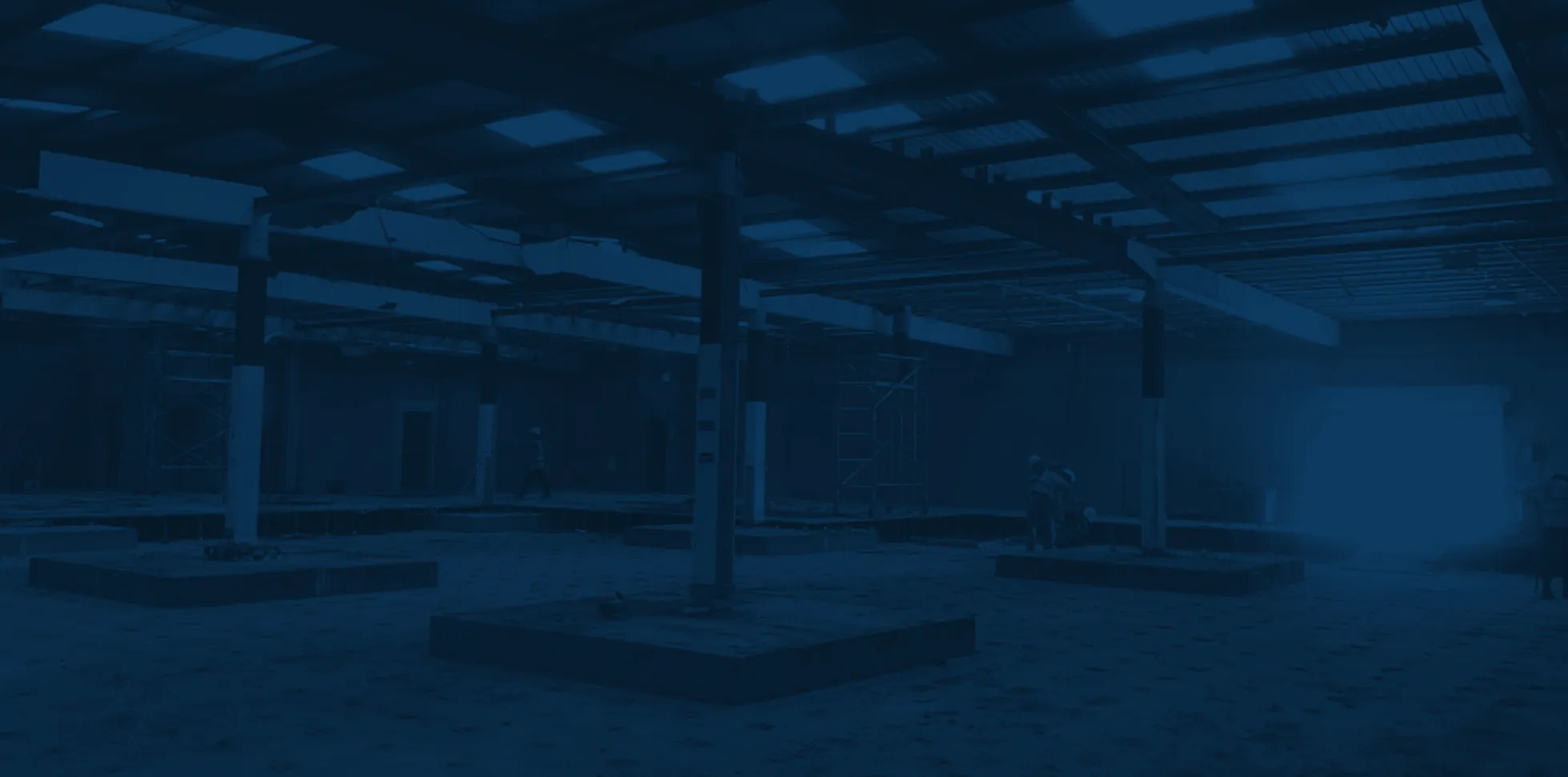
A recent example is our Hudson House dilapidations project, where a former bank building was returned to its original design: reinforced concrete security walls and four cash vaults demolished, HVAC and boiler plant stripped out, 60 rooflights and sections of roof and wall cladding replaced, offices re-ceiled, rewired and redecorated, and the gas, electrical and fire alarm installations re-certified. Woodhams acted as Principal Contractor throughout, giving the client a single point of responsibility for the whole dilapidations package.
Dilapidations contractor for London and the Home Counties
Woodhams Group is based at Rotherwick, near Hook in Hampshire, minutes from the M3 and within easy reach of the M4, M25 and M40. From here we carry out dilapidations and repairs works across London, Surrey, Hampshire, Berkshire, Buckinghamshire, Oxfordshire, Hertfordshire, Kent, Essex and Sussex, for landlords, tenants, managing agents, asset managers and the surveyors acting for them.
We hold ISO 9001, ISO 14001 and ISO 45001, Constructionline Gold and SSIP accreditation, and we have delivered dilapidations work on offices, restaurants, retail units, industrial and warehouse premises and listed buildings. Our teams are used to working to lease deadlines, in occupied buildings and alongside dilapidations surveyors, property managers and solicitors.
If you have received a schedule of dilapidations, or you are a landlord with a unit to get back on the market, contact Woodhams for a free, itemised quotation against the schedule. Call 0300 123 8886 or email info@woodhams-group.com.
Dilapidations FAQs
What is a schedule of dilapidations?
A document prepared by the landlord’s surveyor listing every breach of the tenant’s lease obligations, the clause each breach relates to, the work needed to remedy it and the estimated cost. A terminal schedule is served in the run-up to, or shortly after, lease expiry.
Can a tenant do the dilapidations works themselves?
Yes, and before the lease ends it is usually the cheapest route. Agree the scope with the landlord’s surveyor, appoint a dilapidations contractor to price and deliver it, and complete the works before the term expires. This removes the landlord’s loss-of-rent claim and most of the professional fees.
How long does a dilapidations claim take?
Under the Dilapidations Protocol the landlord normally serves the schedule within 56 days of lease end and the tenant responds within a further 56 days, so an uncontested claim can settle within three to six months. Contested claims take longer. The works themselves, for a typical office or industrial unit, take from a few weeks to a few months depending on scope.
Does dilapidations include removing alterations?
Usually, yes. Most leases and licences for alterations require the tenant to reinstate the premises at the end of the term, which means removing partitions, mezzanines, kitchens, cabling and plant and making good. Reinstatement is often the largest element of a dilapidations claim.
Do you work for landlords or tenants?
Both. Woodhams carries out dilapidations works for tenants completing their obligations before expiry, and for landlords repairing and reinstating a building after a tenant has left so it can be re-let.
Which areas do you cover?
London and the Home Counties, including Surrey, Hampshire, Berkshire, Buckinghamshire, Oxfordshire, Hertfordshire, Kent, Essex and Sussex, from our base near Hook in Hampshire.
This article is general guidance on dilapidations in England and Wales and is not legal advice. For advice on a specific lease or claim, speak to a chartered building surveyor or a solicitor. For a price to carry out the works, speak to Woodhams.